Designing for 2050: Reuse as a Business Model
Tokyo and Sagishima, Japan
東京と佐木島日本
In Japan, academic and corporate partnerships are testing reuse as a viable business proposal - notes from the Gondo lab
Researchers are preparing for a future where virgin materials become increasingly expensive.
Industry partnerships are testing circular construction at full scale.
Reuse is shifting from environmental aspiration to economic necessity.
At the laboratory of Professor Tomoyuki Gondo at the University of Tokyo, researchers are imagining what construction might look like in 2050.
Working alongside major industry partners, students are exploring future scenarios where material scarcity, regulation, labor shortages, and cost pressures make reuse not just desirable but necessary.
One prominent case study is the Japan Pavilion from Expo 2025 in Osaka, designed to be repeatedly assembled, disassembled, and rebuilt. Rather than viewing demolition as the end of a building’s life, these projects treat deconstruction as part of an ongoing material cycle.
The question is no longer whether reuse is possible. The question is whether future construction can remain affordable without it.
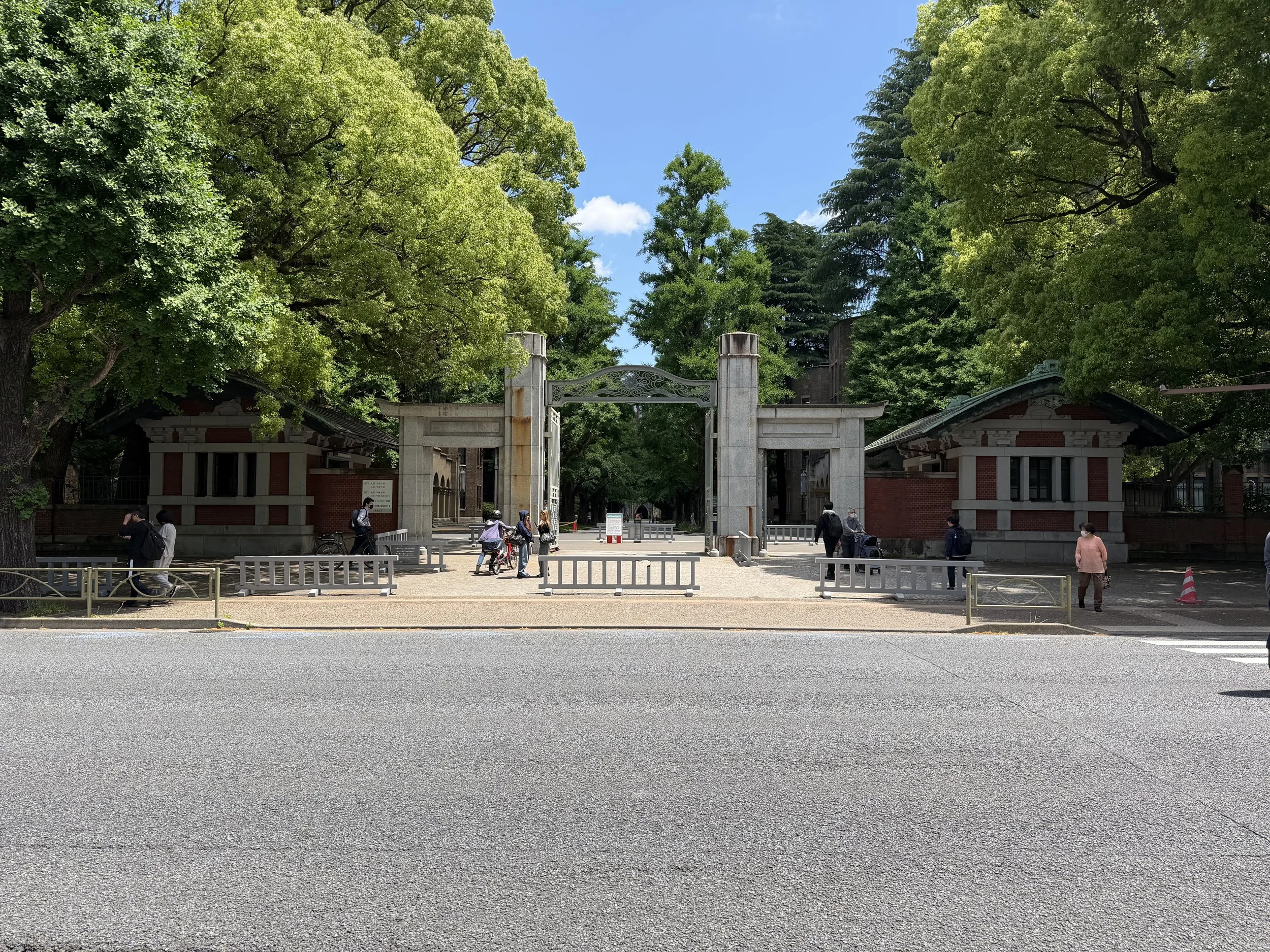
Tokyo University Hongo Campus
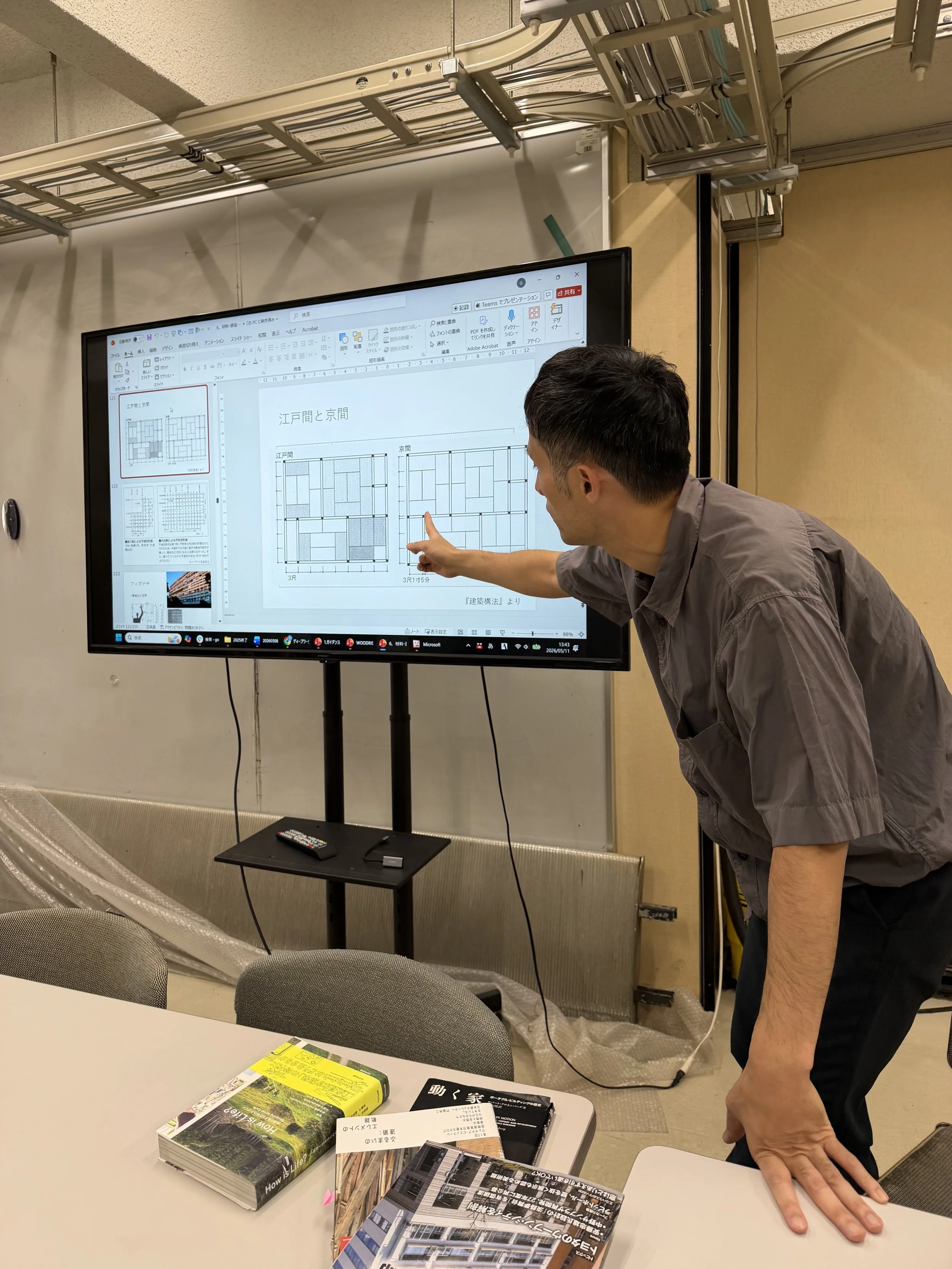
Gondo-sensei in his lab
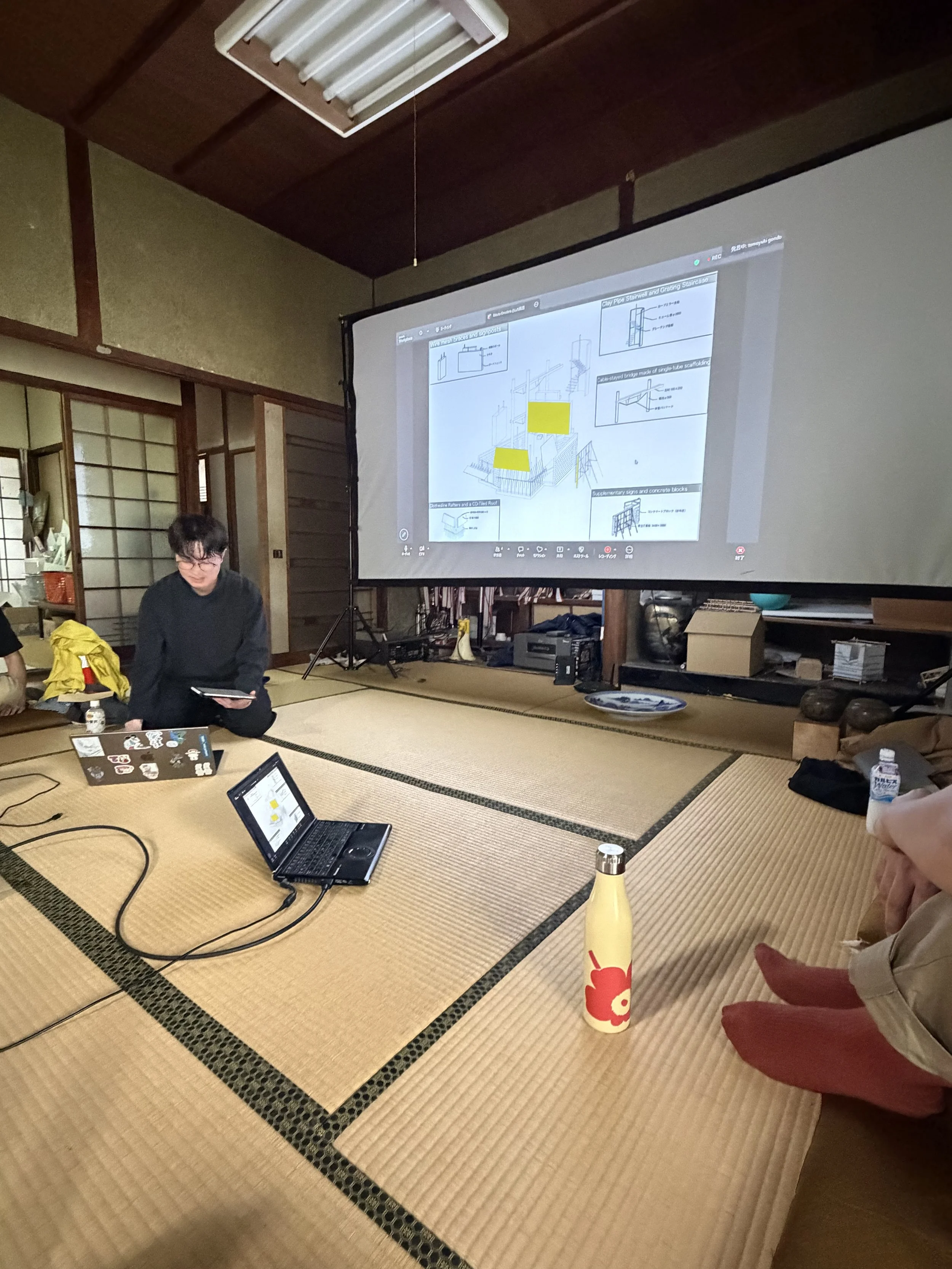
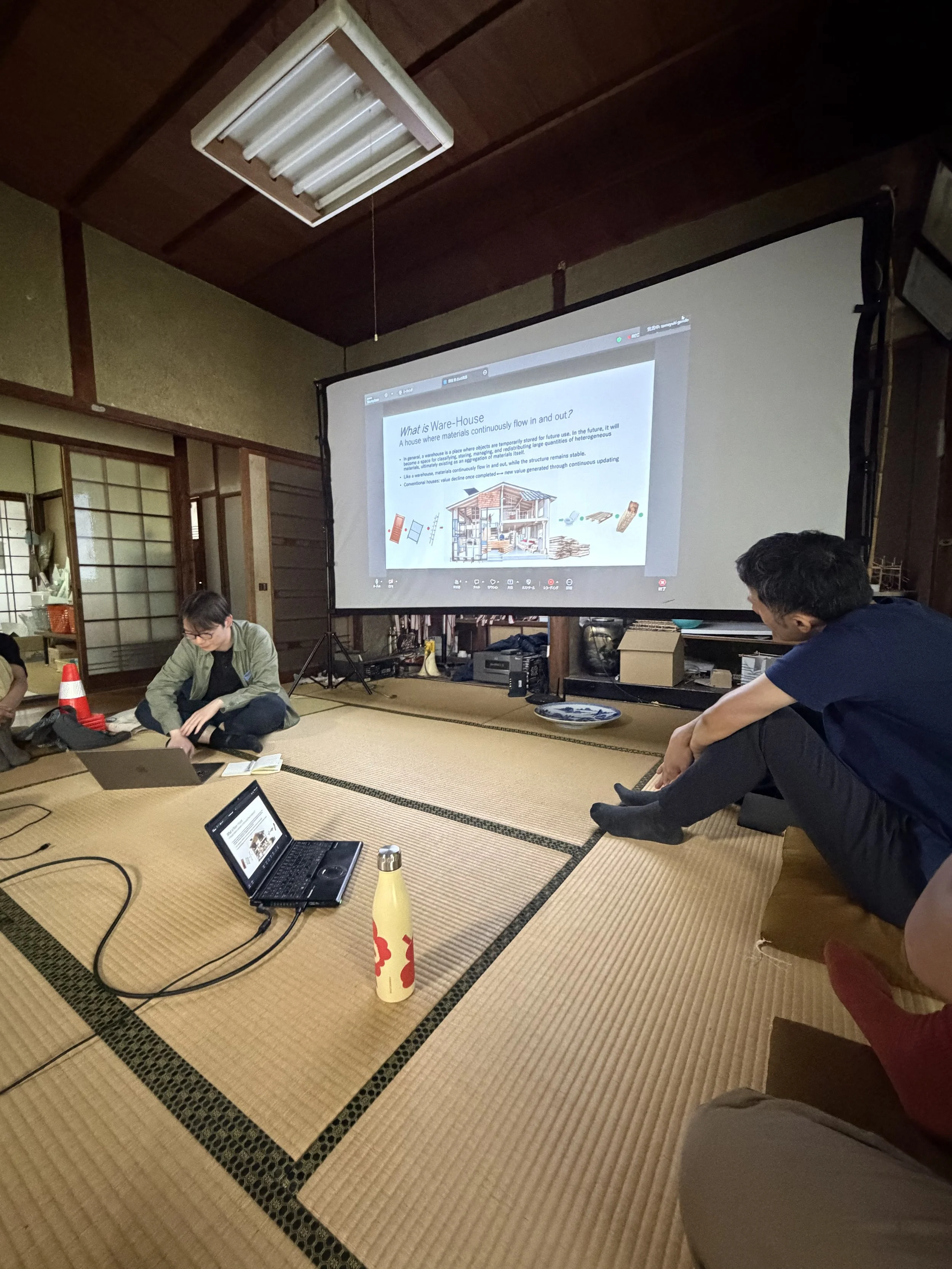
Student presentations to the Red Dot School at the Kakumeshia house on Sagishima