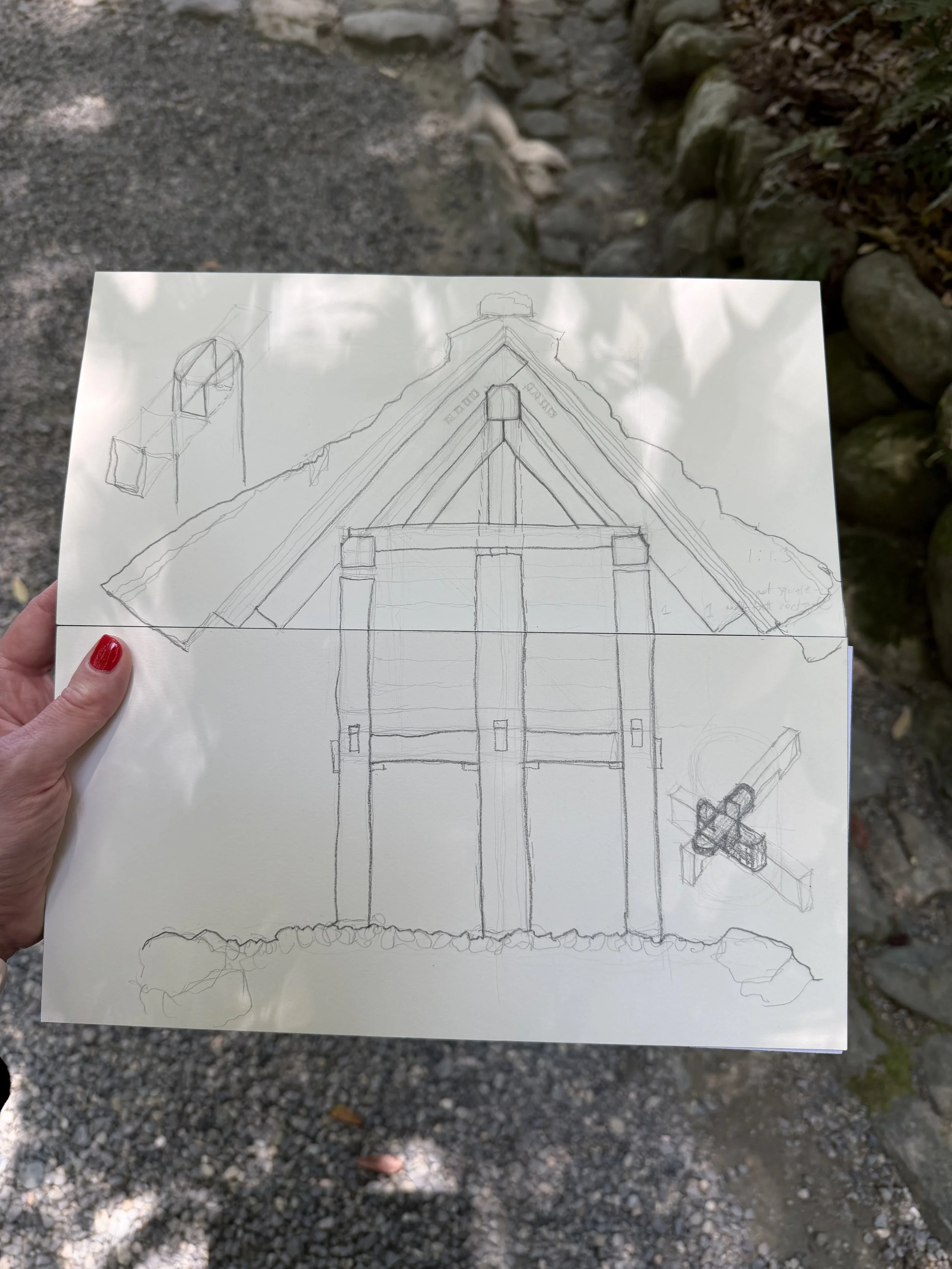
Detailing for Deconstruction
Ise, Japan
伊勢市、日本
Imagine tearing down your most sacred building every 20 years—on purpose.
For the last 1,300 years, a Shinto-Buddhist community in Japan has done exactly that.
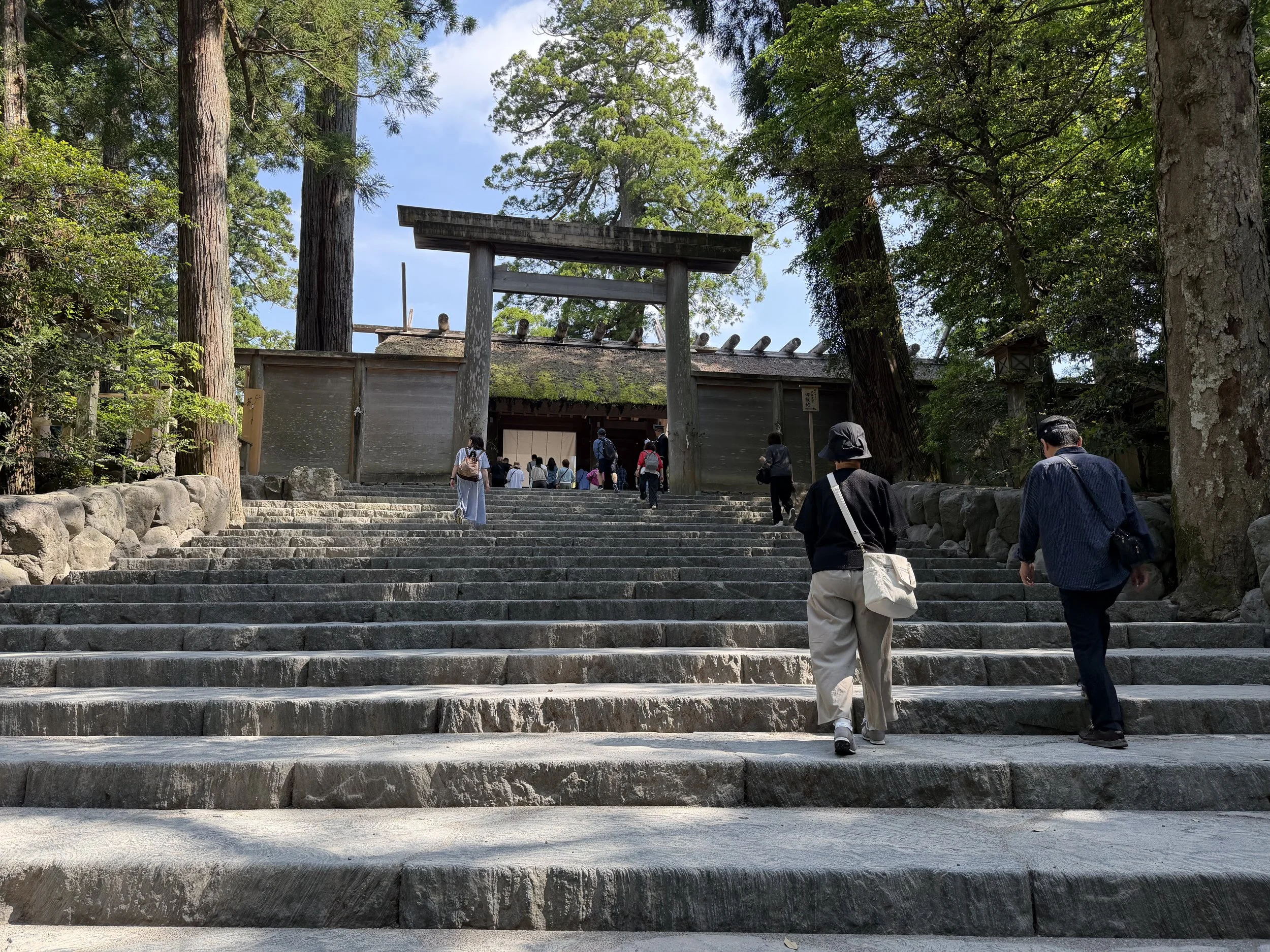
About four hours south of Tokyo, some of Japan’s most sacred shrines are regularly dismantled and rebuilt as part of an ongoing cycle of renewal. What might initially seem like waste is actually an extraordinarily sophisticated system of stewardship, craftsmanship, and knowledge transfer.
Why rebuild a functioning structure?
The answer lies in what the cycle preserves. The rebuilding process transfers construction knowledge between generations, sustains traditional forestry practices, and continually renews relationships between communities, craftspeople, and place.
The buildings themselves become temporary vessels for something more enduring: knowledge.
For designers interested in deconstruction today, Ise Jingu demonstrates that successful material reuse begins long before a building reaches the end of its life.
The timber is sourced locally, and the structures are built by hand using traditional tools and joinery techniques. When a shrine reaches the end of its 20-year cycle, it is carefully deconstructed. The materials are then reused in smaller shrines or transformed into religious objects, extending their life for decades more.
I visited the shrine and its museum to learn how this centuries-old practice works in reality. As an architect researching design for deconstruction, I was struck by how many lessons this tradition offers for contemporary building culture.
This ancient tradition has been honed by Buddhist craftspeople in service of a tradition of housing the spiritual home of their god, known as Kami-sama. A new house is provided following a similar cycle as that of storing rice.
A spiritual cycle of 20 years has led to a highly developed wood building technique. Timber is sourced locally and shrines are still built by hand using traditional tools. After each cycle, the shrines are deconstructed and the timber is either repurposed in other shrines or repurposed as religious relics.
I visited this shrine and the local museum exploring the construction technique. While this highly refined building technique is designed for a divine purpose and not easily replicable, I found there’s a lot we can learn from the craft, knowledge sharing through ritual and apprenticeship, and detail development in regards to design for deconstruction and material reuse.
Rituals & Preserving Craft Knowledge
The Ise Jingu shrines provide fascinating lessons for the potential of deconstruction and material reuse. A highly refined building technique is still done mostly by hand, and exists thanks to ritual transfer of knowledge through practices that extend beyond the Shinto Buddhist domain and into the local community and region. Shrines in this beautiful park are sparse, beautiful, and crafted with impeccable detail and precision.
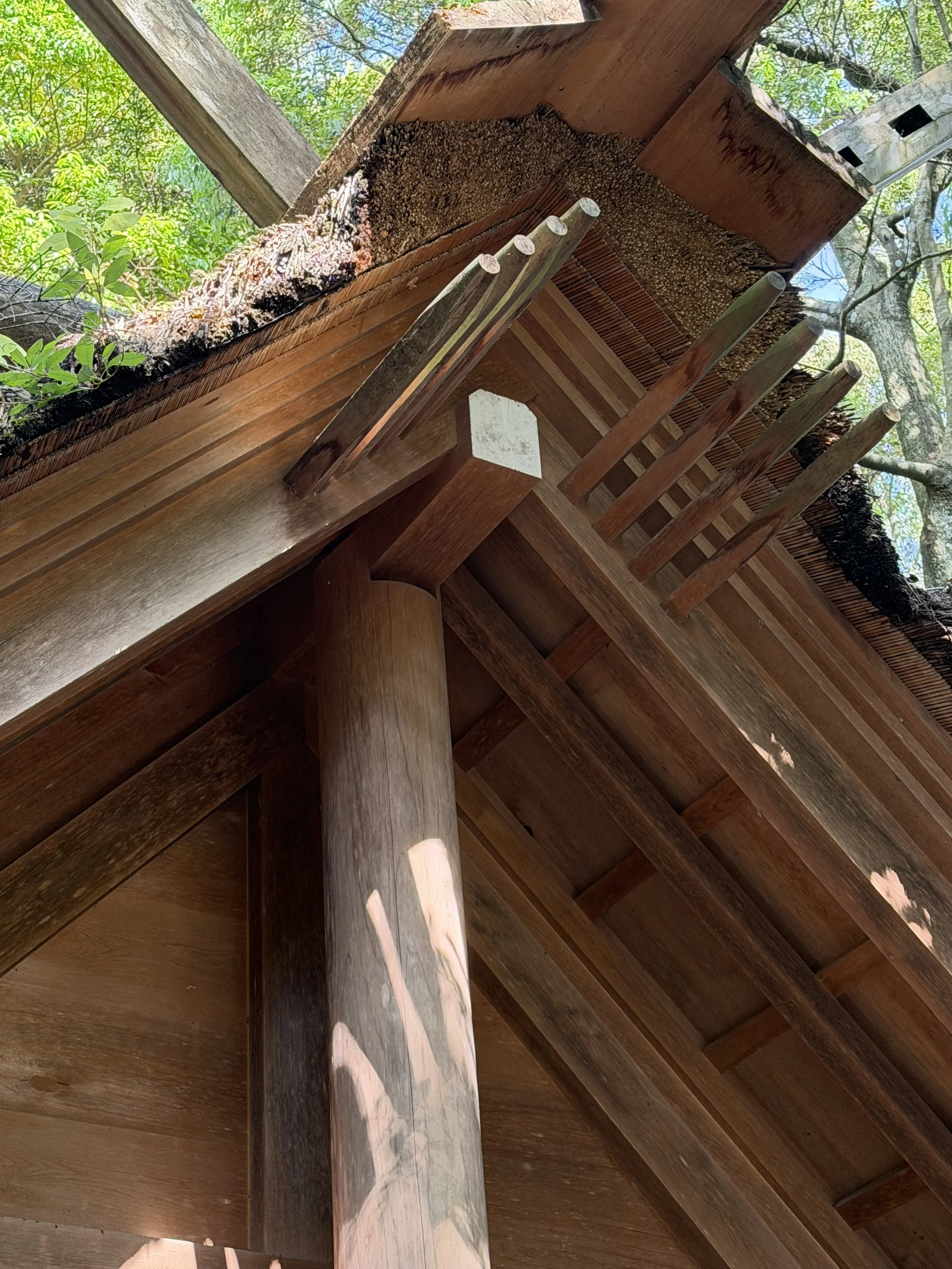
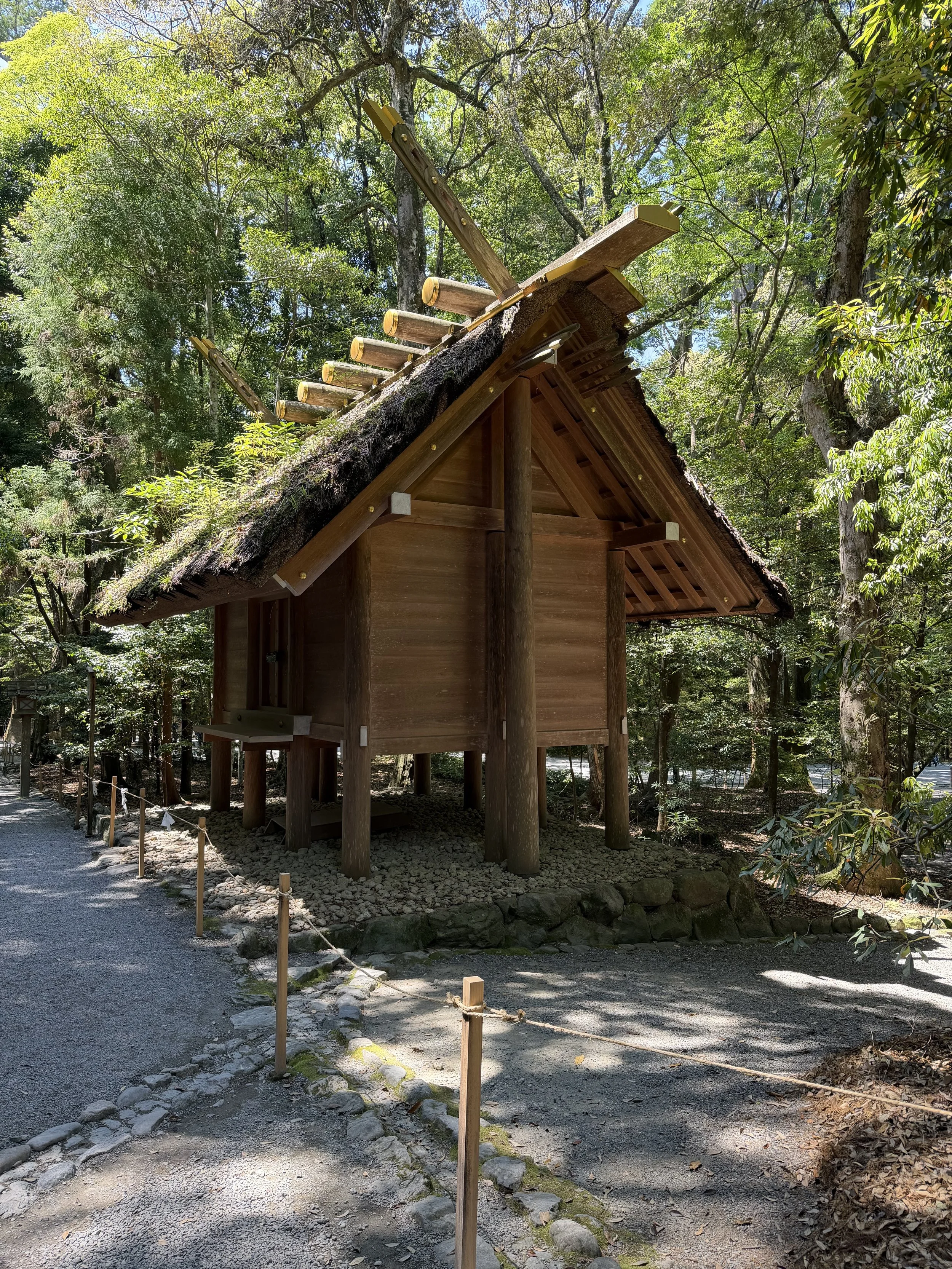
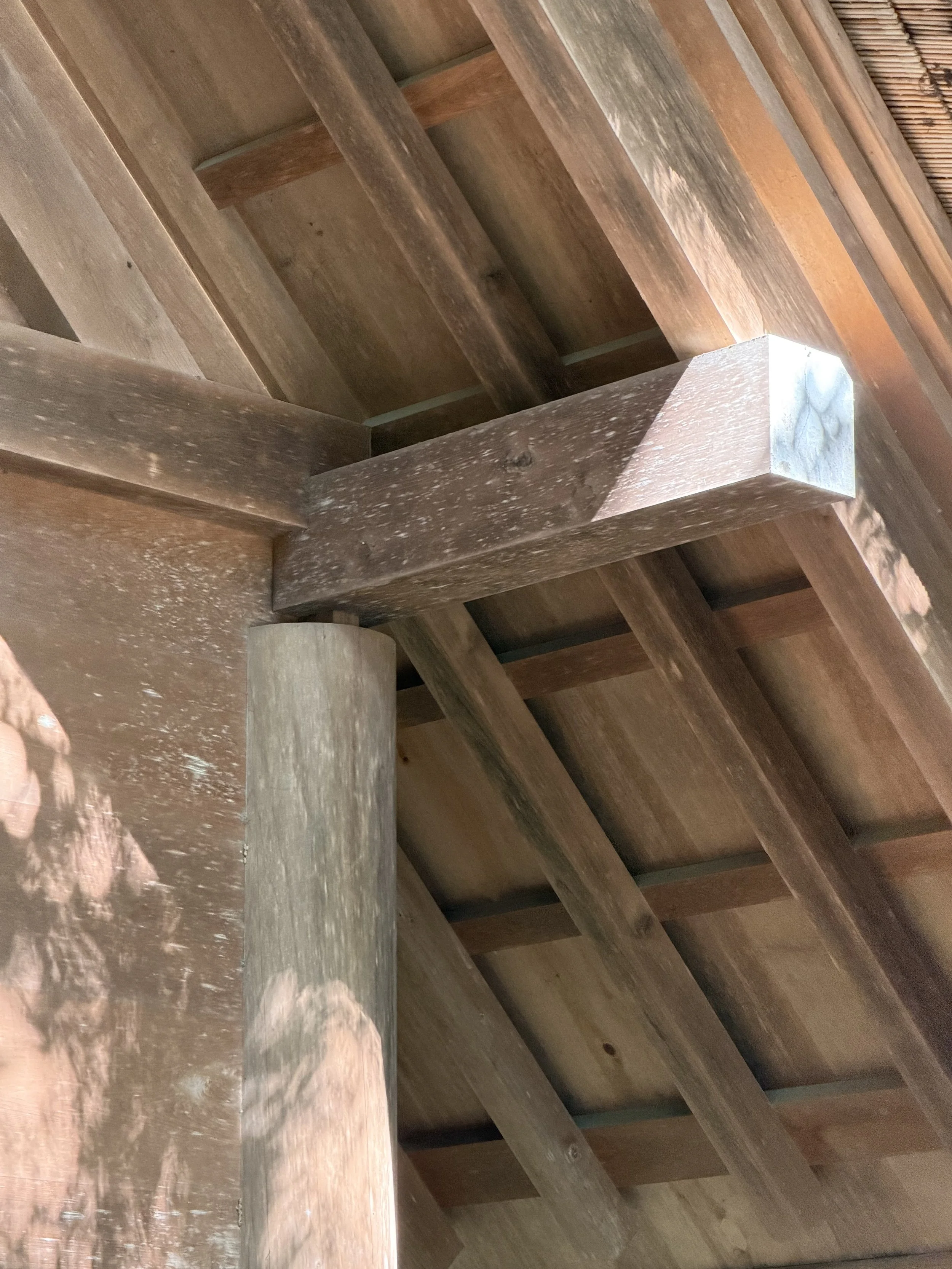
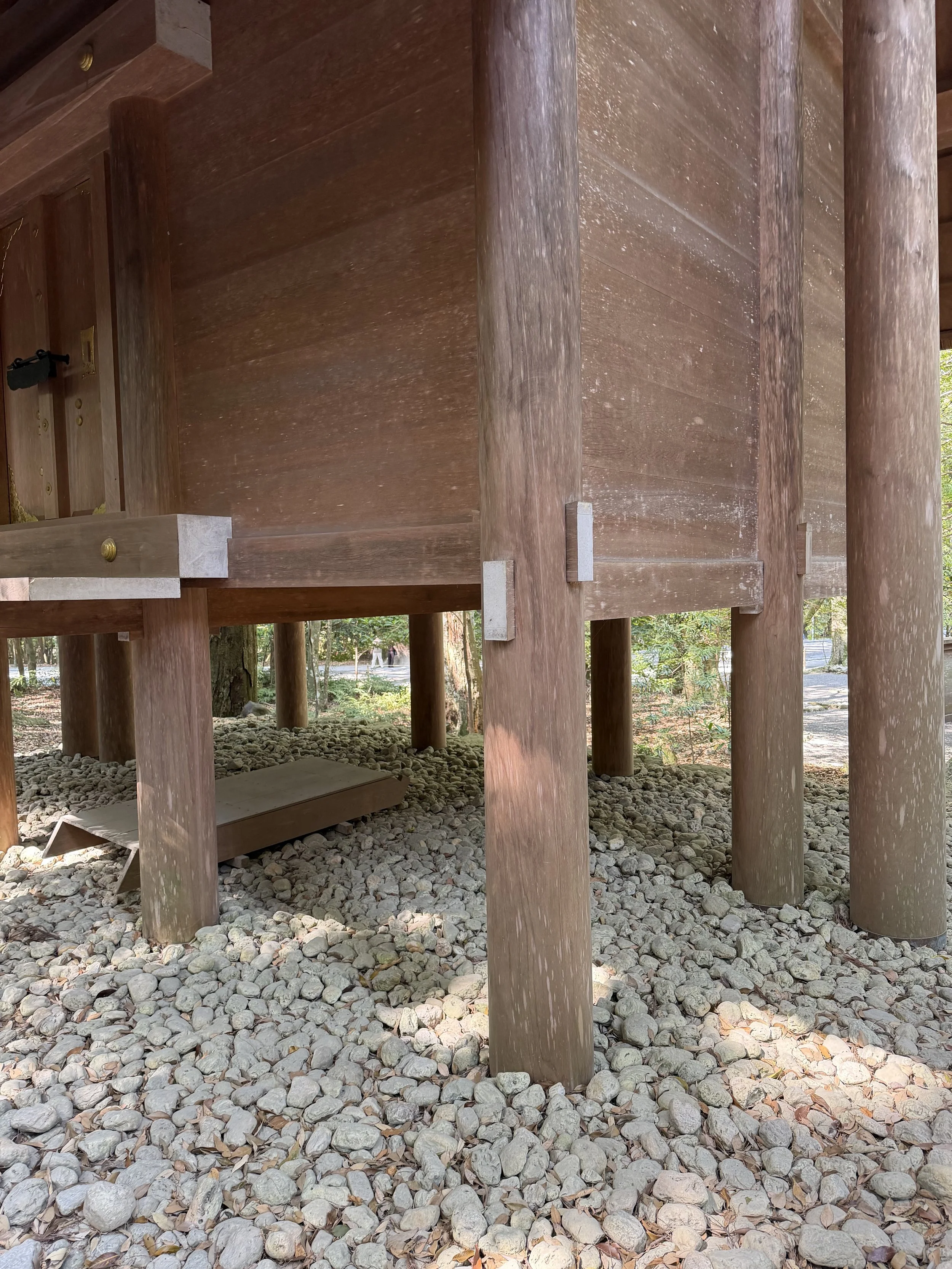
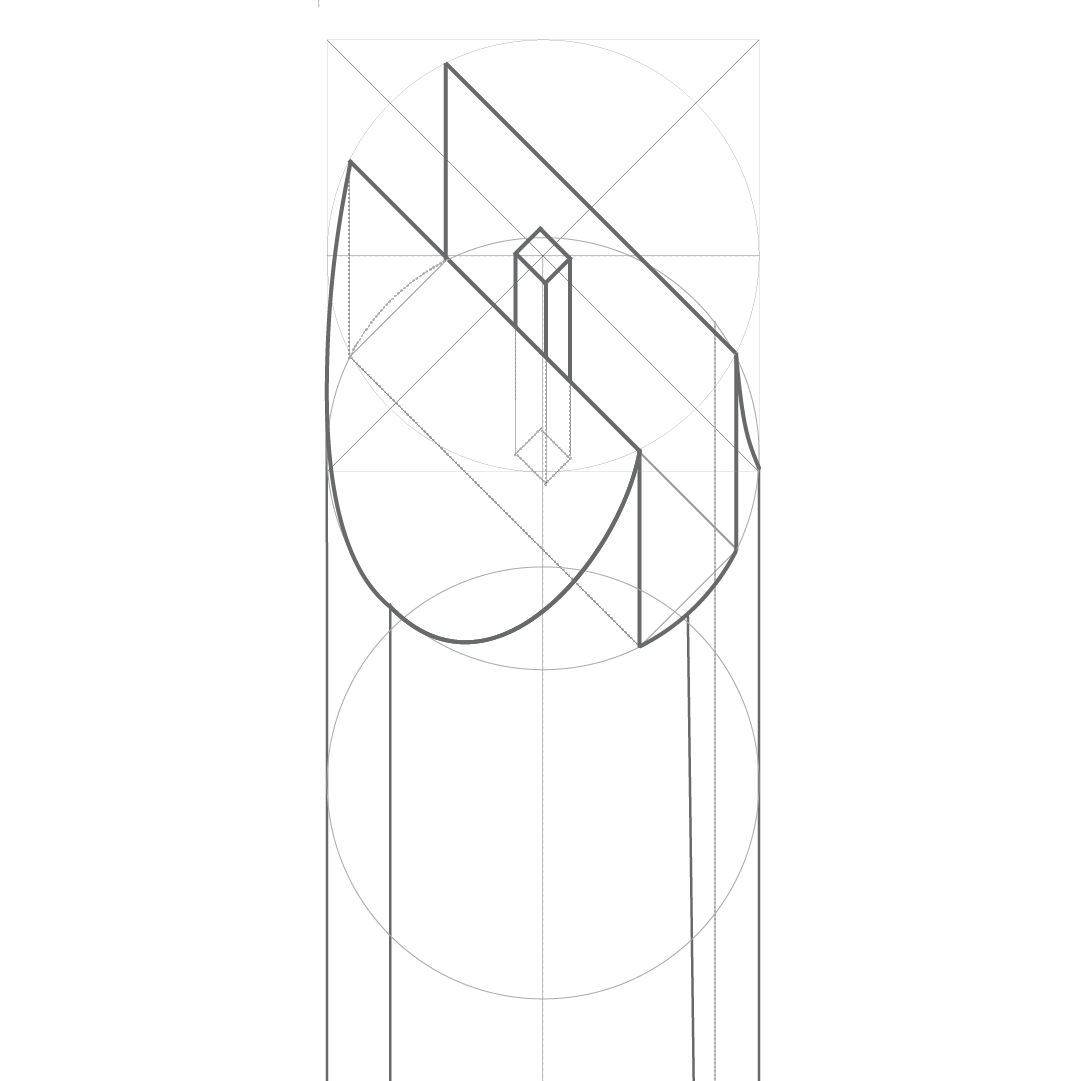
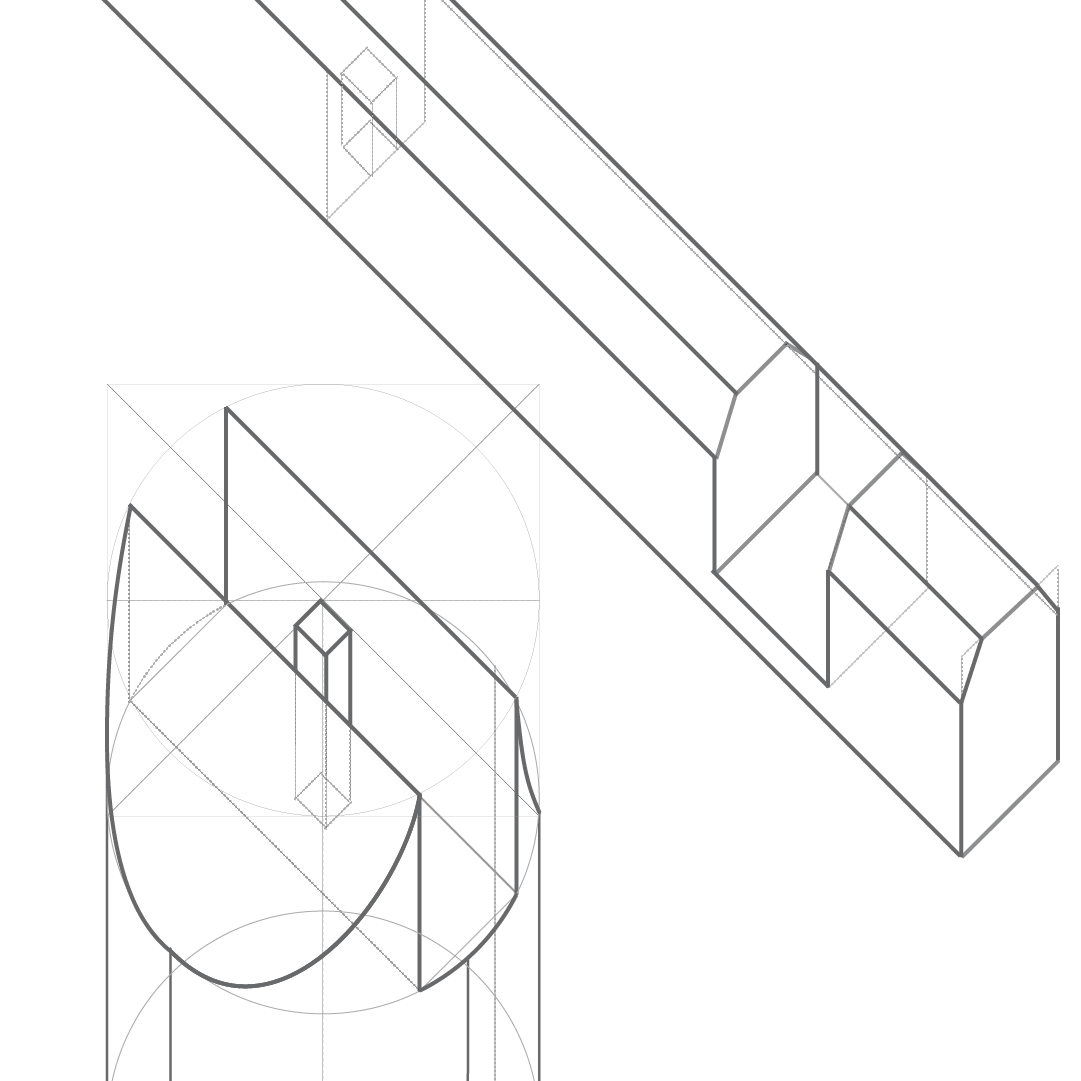
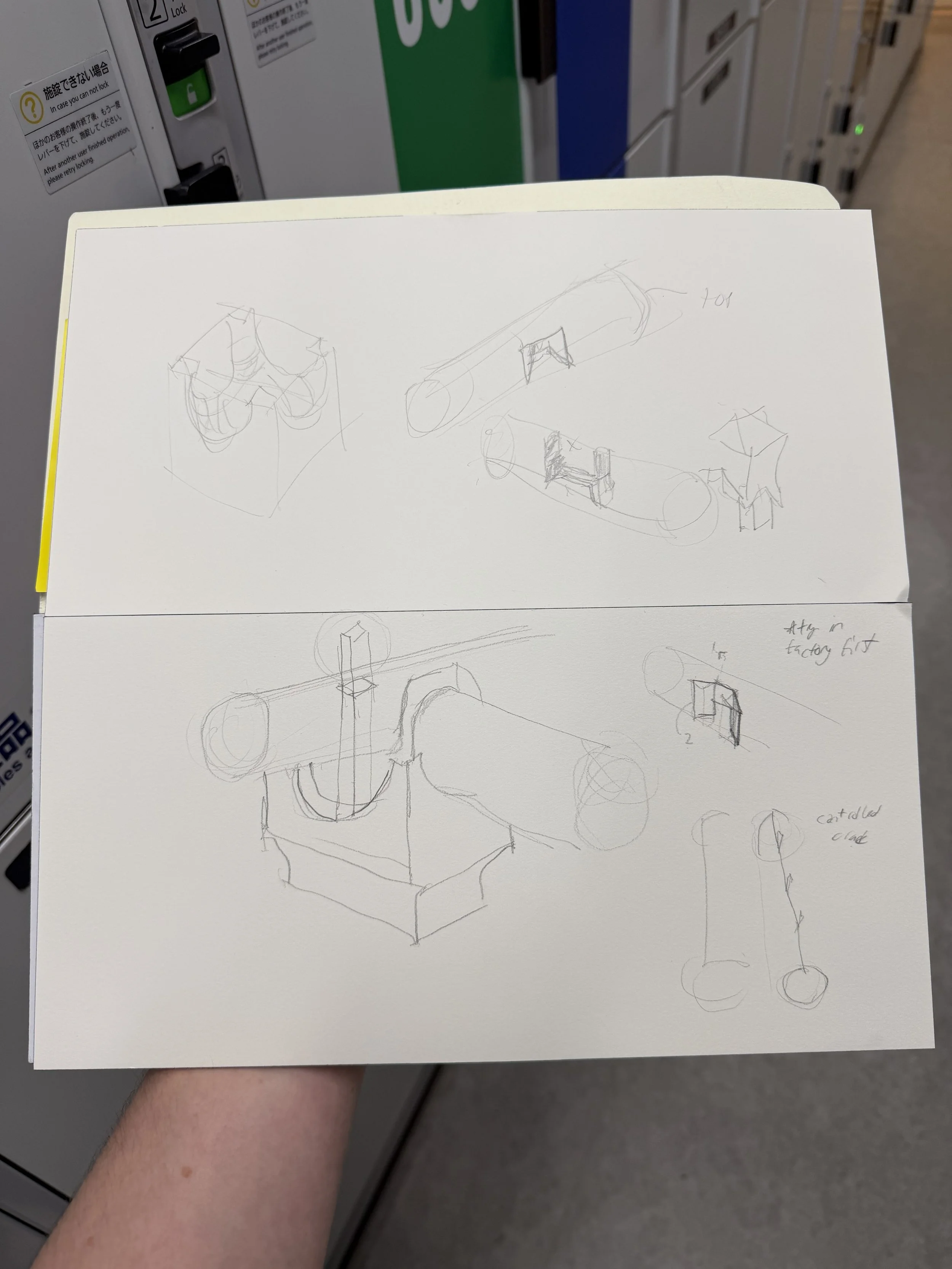
Joints refined over time are highly complex, allowing for intersections of two or more structural elements through columns (called ‘hashiri’). Built by hand with traditional wood carving tools, joints can be adapted on-site. Videos of construction in the Sengukan Museum in Ise show a highly calibrated, precise orchestration of construction. Joints are dropped in and slid over, perfectly interlocking, using puzzle-like interlocking of pieces. Details are replicated on shrines throughout the region. The shrine is built off-site to confirm constructability before being re-built on site. After the 20 year cycle, a new shrine is built directly adjacent to the old one. For a few months they stand next to each other, then the old shrine is deconstructed and the material is either turned into ritual artifacts or re-used in other local shrines. There are 125 shrines under the Ise Jingu jurisdiction which undergo ritual deconstruction under this 20 year cycle, and during the majority of the 20 year cycle, each shrine sits next to an empty foundation with a footprint of its future ‘twin’ etched on the ground with contrasting stone.
However, the development of this building technique transcends ‘architecture’ and is reliant on thousands of years of knowledge passed down through generations in service of a belief system, Shinto Buddhism. At Ise Jingu, highly complex and precise joints are carved by hand by monks. Procurement of wood begins 7 years before the reconstruction. I was lucky enough to witness a portion of this process with the Aki Matsuri festival, where trees are brought into town via a parade of ‘social groups’ who collectively pull the wood through the town. At one point in history, the ritual of bringing wood into the town was only performed by Buddhist monks. However, townspeople were invited to participate, and now this festival is an integral part of the local life. It seems that the broader incorporation of festival and meaning has widened the influence and support of this technique and one can only wonder if this helped nurture this over thousand year-old tradition.