The Red Dot School’s ‘Salvage-as-Service’ Studio Connects Meaning & Material
The Red Dot School combines education, practice, and community stewardship.
Students learn through direct engagement with people and place.
Reuse succeeds when relationships are valued alongside materials.
On the small island of Sagishima, the Red Dot School is redefining what an architectural practice can be.
Part school, part design office, part community resource, and part material network, the organization approaches architecture as an act of care.
Students arrive from around the world to participate in short but immersive studios focused on issues facing the island, including vacant homes, population decline, and material recovery. Yet the curriculum extends far beyond buildings. Daily exercises with residents, shared meals, meaningful learning about the residents and island history, and collaborative work all contribute to understanding the social fabric that makes stewardship an act of deep care.
What emerges is a powerful reminder that reuse is ultimately about relationships. Materials may circulate through buildings, but knowledge, trust, and care circulate through communities.
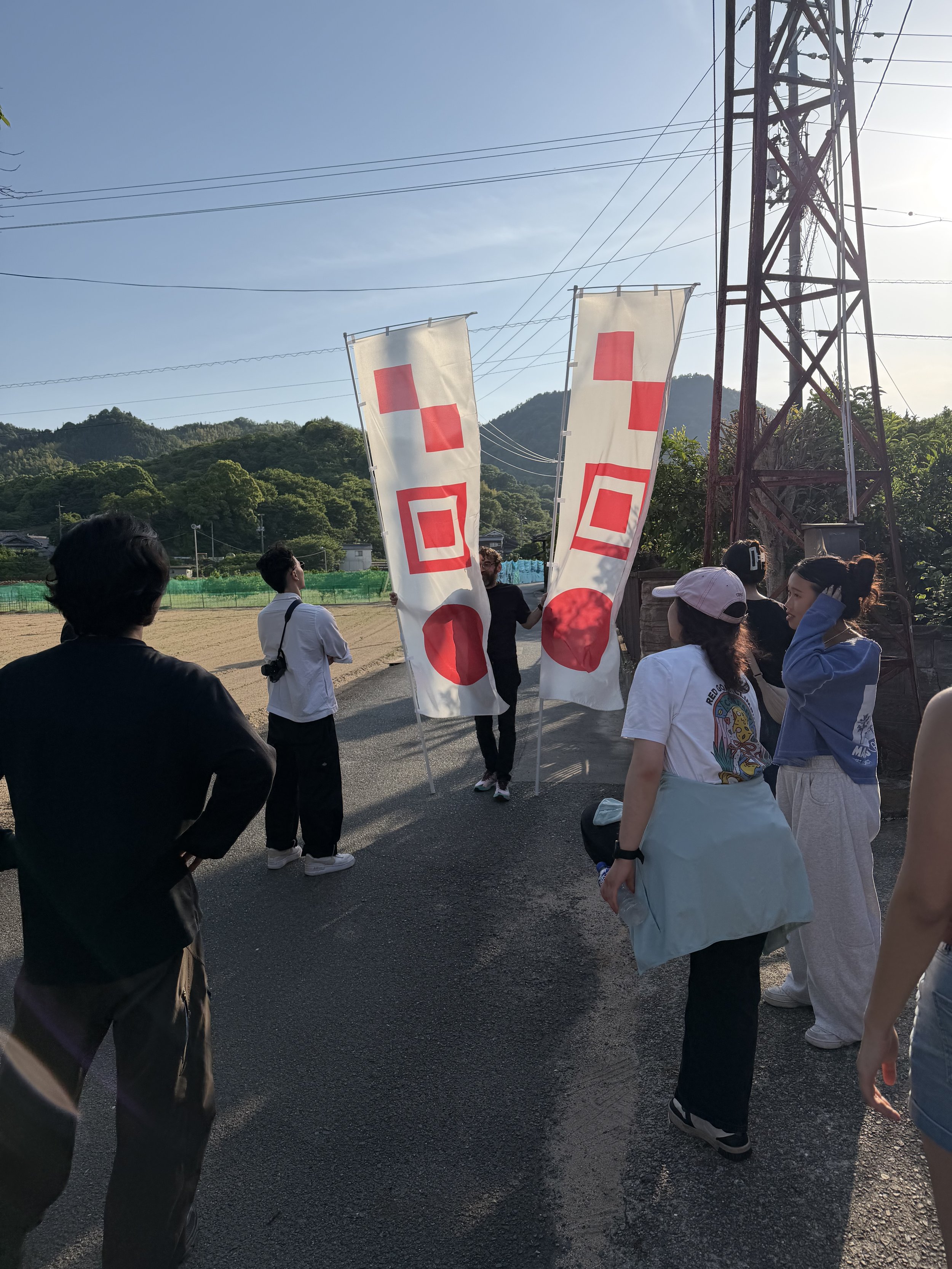
Students gather behind flags designed by the school and resident-member Isso-San to represent the Red Dot School
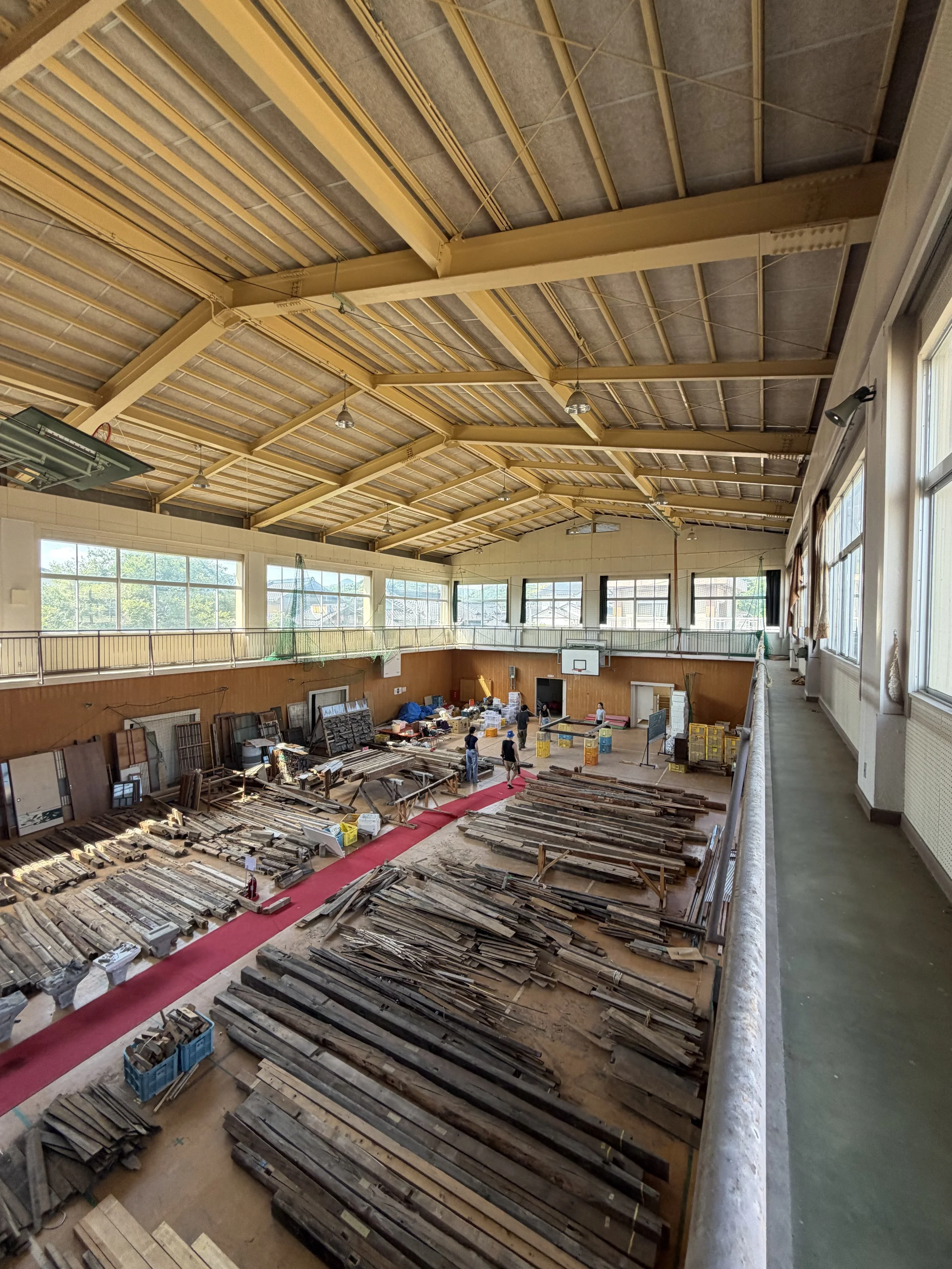
One local elementary school has been closed, and the gym now serves as a community space and staging area for the Red Dot School. The Salvage-as-Service studio worked on a material inventory system and storage system using salvaged material to temporarily store salved material.
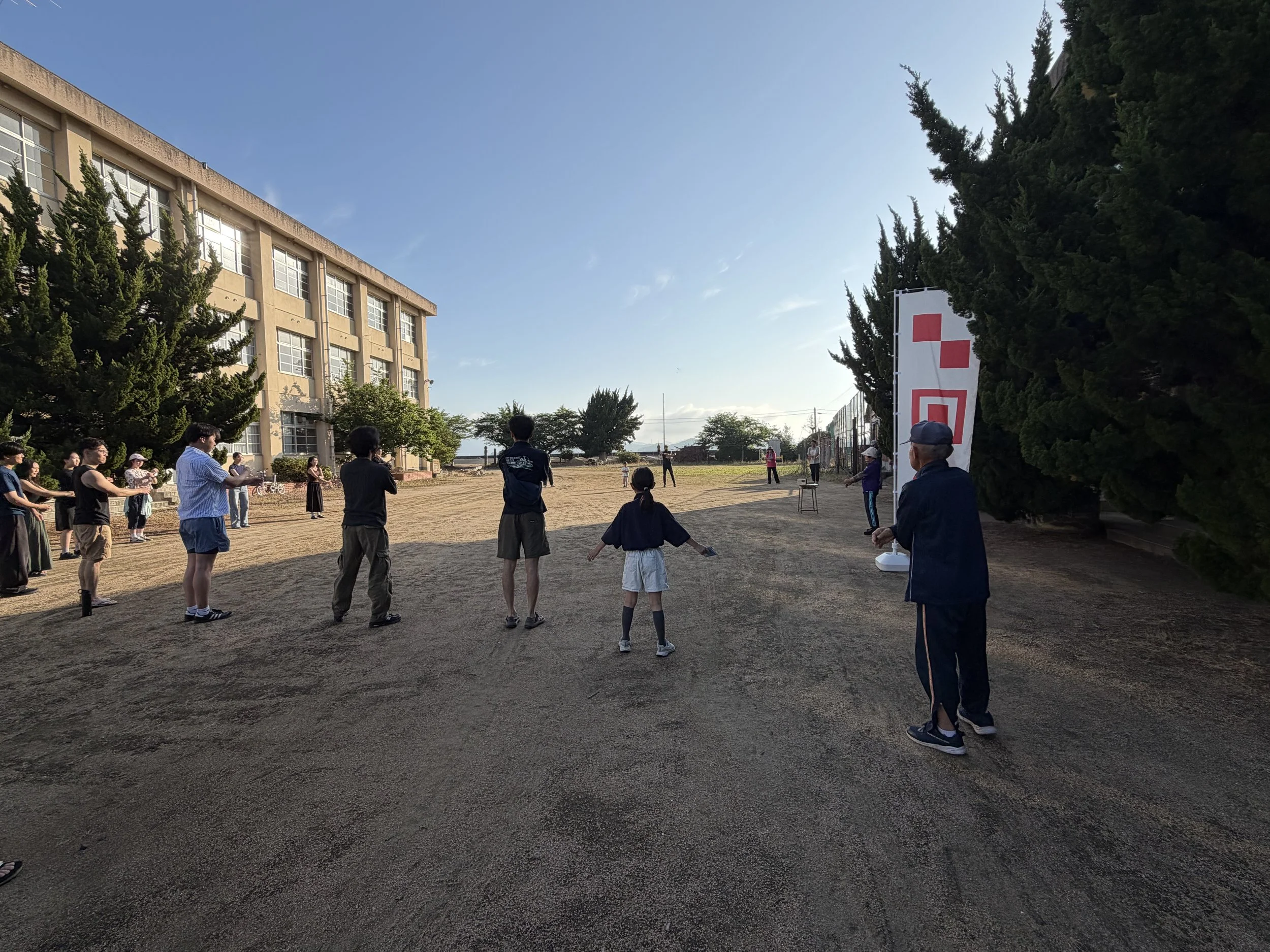
Students participate in morning Radio Taiso (exercise) sessions

Students and community members meet for breakfast, dinner, and the occasional lunch next to the ocean